On November 14, 2025, the Institute of International and Strategic Studies (IISS), Peking University (PKU) held a seminar on "New Developments in the Russia–Ukraine Conflict and the Trajectory of Russia–U.S. Relations" and the 28th North Pavilion Salon.

The seminar brought together experts and scholars from universities and research institutions including Peking University, China Institutes of Contemporary International Relations, China Institute of International Studies, Shanghai Academy of Global Governance & Area Studies at Shanghai International Studies University, China Foreign Affairs University, Sichuan University, the Center for International Security and Strategy at Tsinghua University, Heilongjiang University, and Jilin University. Guan Guihai, Executive Vice President of IISS, PKU, attended the seminar and delivered remarks. The seminar was moderated by Dai Weijing, Assistant Professor at the School of International Studies (SIS), PKU and Research Fellow at the Russian Research Center of PKU.
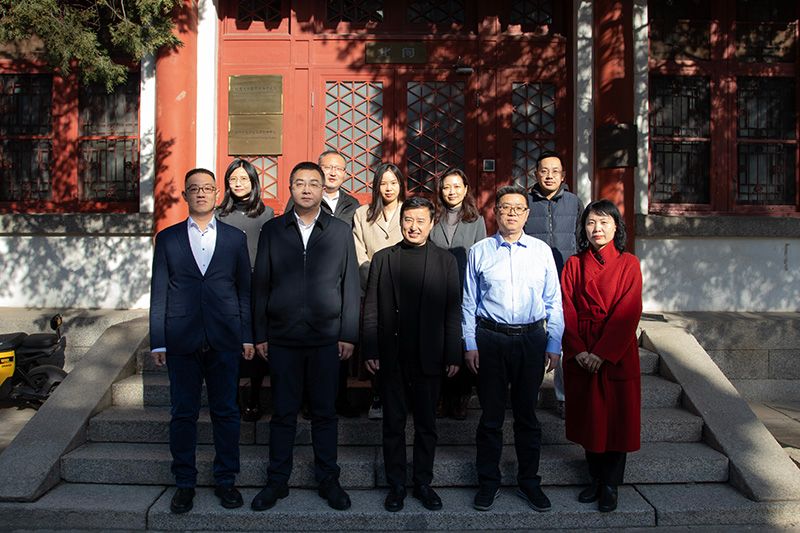
The North Pavilion Salon aims to foster substantive dialogue between theoretical and policy research and provide a platform for young and middle-aged scholars. In the first session, participants discussed Russia's political and economic conditions, the persistence of the Russia–Ukraine conflict, shifts in the EU's stance on the conflict and on Russia–U.S. relations, divesting from the liabilities of geopolitical conflict, and emerging narratives around Russia–U.S. interaction. In the second session, participants analyzed social life in Russia under the conflict, the transformation of Russia's nuclear strategy in the context of the Russia–Ukraine conflict, Russian perceptions of the United States, and Yangtze–Volga cooperation between China and Russia. The experts noted that the Russia–Ukraine conflict has had profound, multifaceted, uneven, and lasting effects on Russia's domestic political and economic situation as well as its external relations. While Russia's economic and social conditions remain broadly stable, the potential long-term negative consequences of the conflict warrant continued attention. The contradictions between Russia and the United States and Europe are unlikely to be resolved in the near future. Russian perceptions of the United States are influenced by an underlying identity anxiety and have trended toward negativity and confrontation over the long term. China–Russia cooperation has proceeded relatively well against the backdrop of the conflict, and while the regional cooperation mechanisms face challenges, the overall outlook remains positive.
Editor: Li Fangqi Photographer: Zheng Huaizhou


 Features